I can't imagine anyone who doesn't know the original Pied Piper Story, but just in case: The city of Hamlin hires The Pied Piper to lead the rats out of city, but then they refuse to pay him. To exact his revenge, The Piper leads all of their children out of city and they are never seen again. This would be a very short movie if only that plot was used, so the makers of The Pied Piper padded out the tale to include stories concerning a traveling troupe of entertainers, an arranged marriage, and a Jewish alchemist and his assistant.
The costuming of the characters and the German location shooting were both good, but that's about it. Most of the movie was shot in wide shots, which to me is always distracting. On top of everything, the movie had the pacing of those dreary historical movies they sometimes showed you in school....you know the type....you would be all excited about watching a movie instead of having class, then find yourself watching a film which eventually put you to sleep.
I've always liked Donovan and his laid back flower power groove, so when I saw he was the titular character in The Pied Piper, I was expecting a movie with the same sort of vibe. Instead I got pounded over the head with ponderous statements about over-taxation, religion, hypocrisy, superstition and probably some other things that I have excised from my brain. It was disappointing to find that Donovan was only a minor character in the story and although he composed all of the music for the soundtrack he only sings three songs: "Riding Homeward", "People Call Me The Pied Piper", and "What A Waste of Time" - the last song perfectly describes this movie. The only people I can think who would enjoy The Pied Piper are those interested in seeing people wear funny hats (see below)
I couldn't find a trailer for the movie, but you can watch the whole movie in parts on youtube. Below is Donovan from a 1972 BBC appearance singing a song he wrote for the movie that didn't make the final cut.
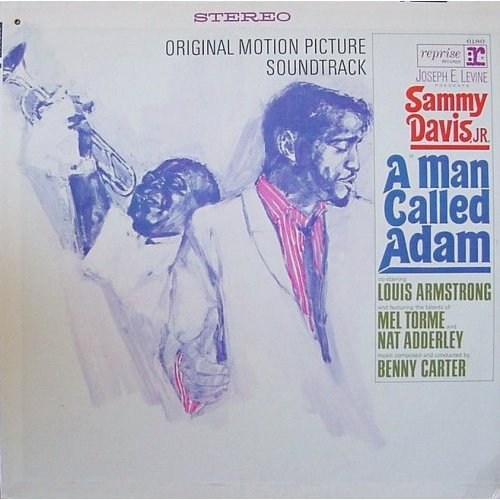
This is an odd movie, it combines 1960's Black politics and the world of Jazz music. The two intersect in A Man Called Adam with Sammy Davis, Jr. playing the titular character. Since I'm not Black and not a Jazz Aficionado, while watching A Man Called Adam, I often felt Walter from The Big Lebowski was going to jump out and yell at me "You're out of your element!"
Sammy Davis, Jr.'s character is a very unhappy man, to say the least, and he takes out his unhappiness on his fans and his close friends. A few years previous, Sammy had some problems with racism. He reacted by getting drunk and while driving he had an auto accident which killed his wife and daughter. Sammy meets a woman (Cicely Tyson) who practices Martin Luther King's non-violent approach to racism and falls in love with her. Sammy tries to be a better man and be more like her, which leads him to refuse to act when another racist incident occurs. This sends Sammy into a tailspin, where (as far as I can tell) he drinks himself to death....the movie has a very clichéd ending with him blowing his last notes on stage, collapsing and dying.....see I told you it was clichéd.
I was never really sure if Sammy was a mean drunk before the accident or only after the accident. His self destructive attitude and pushing away of anyone who got close to him appeared to be a defense mechanism. Yet, when he does find true love and things don't work out perfect for him, he goes right back to square one, making his character appear more flawed than the external events encountered.
Sammy sings "I Want To Be Wanted" and "Whisper of One", but Nat Adderley does the "ghost work" for Sammy's horn playing. Louis Armstrong plays an older jazz musician, who is more interested in entertaining than in race relationships, and sings "Someday Sweetheart" and "Back of Town Blues". Mel Torme is featured at a party singing "All That Jazz". Frank Sinatra, Jr. was the surprise in a A Man Called Adam, as he was very convincing playing Sammy's young protégé. The soundtrack to the movie was composed by jazz man Benny Carter. There are other jazz men in this movie, but since I can't positively identify them, I'll leave it up to all of you Jazz Cats to pick them out yourselves when you watch A Man Called Adam.
I couldn't find a trailer for the movie, but I did find the clip below of Mel Torme singing "All That Jazz" from A Man Called Adam.
IF you are only going to watch one 1950's Rock and Roll movie ....You SHOULD choose Rock Baby Rock It (RBRI) to experience the true feeling of the era. There's no way I will be able to convey in words what a great group of acts this movie presents and what a joy they were to watch. You have to experience them for yourselves. These aren't your famous big name acts, although most people probably know Roscoe Gordon and Johnny Carroll (who, by all rights, should have been a bigger star), instead they're people who look like they're really enjoying playing, singing, and rocking out.
RBRI was originally titled "Hot Rocks", but the censors deemed the title too provocative (I know that's hard to believe today, but remember this was 1957 and times were a lot different), although why the censors still let the teens' club be called Hot Rocks is a mystery. The plot and the acting are just what you would expect, so let me get the plot, which might as well have been from a Mickey Rooney movie, out of the way. It seems the kids are running behind on the rent at their Hot Rocks Club and now some gangsters are wanting to get them thrown out and take over the location. The kids decide to "put on a show" to raise funds for the club. While out getting the acts lined up for the benefit show, they also manage to get the gangsters busted and sent to jail.
The coolest things about the acting (or non-acting) part of RBRI are the gangsters were all cast from local wrestlers and the kids were all cast from the local high school. The kids actually do a better job acting than the gangsters, and maybe that's because they really just had to act like....well, themselves. It was interesting to see the kids first at The Hot Rocks Club dressed in what I assume were their everyday school clothes, but once they start going to other clubs to book acts and at the benefit show, the kids all dress up with the girls in nice dresses and the boys even wearing ties.
Before I start on the music acts, I would like to mention the dancing. Unlike Rock Around The Clock and Don't Knock The Rock which both had some great dancers (either professional dancers or top level amateurs). RBRI has kids dancing or boppin', whichever you prefer, who look like real kids dancing (which of course they were). They didn't look like they were trying to show off any fancy steps, instead they're really into the music and dancing with pure joy. One of the dancers, Kay Wheeler (founder of the first Elvis Presley Fan Club) does the commentary on the dvd and while I usually hate to listen to commentaries, hers was well worth my time. My favorite line is when she says "I'm a teenager caught in an old lady's body". Now on to the music.
Like most of these movies that were made to primarily showcase different performers, RBRI has a variety of styles of music. My understanding is most of these acts were regional performers from around the Dallas, Texas area. The Cell Block Seven, an older group who would probably appeal to Bill Haley fans, open and close the movie with "Hot Rock" and also perform "When The Saints Go Rockin In". Don Coates and The Bel-Aires, a white vocal group, sing an up-tempo "Stop The World", and a slower song,"Love Never Forgets". Black vocal groups are represented by The Five Stars who sing "Your Love Is All I Need", "Polly Molly", and "Juanita". The Belew twins, who might have been trying to channel The Everly Brothers, sing "Lonesome" and "Love Me Baby", but I'm pretty sure I've never seen one of the Everlys "bop out" during a number like one of the twins does. Not to mention, while they're singing "Love Me Baby" a set of young female twins joins them on stage and dances with the brothers.
There's nothing slack about the above performances in RBRI and the movie would have been good, even if they were the only acts. The following acts are just so much stronger, they overshadow the ones previously mentioned. Preacher Smith and The Deacons, who have a distinct New Orleans sound to their music, perform "Eat Your Heart Out" and "Roogie Doogie". Great R&B songs from Roscoe Gordon and The Red Tops, with Roscoe's pet rooster Butch sitting on top of his piano, as they perform "Chicken In The Rough" and "Bopp It". Saving the absolute best for last, great rockabilly from Johnny Carroll and The Hot Rocks who perform "Crazy Crazy Lovin", "Wild Wild Women", "Rockin Maybel" and "Sugar Baby". The last song Johnny Carroll actually sings offstage as Kay Wheeler has her solo dance number and shows why she was known as the "Queen of The Rock n Bop".
This movie was released later in the same year (1943) as Cabin In The Sky, which was a story with music. Stormy Weather (SW), on the other hand, is a big budget Hollywood style musical with a story. The plot of SW is based loosely on the real life of the star of the movie, Bill "Bojangles" Robinson.
SW is told in flashback style as Bill receives a copy of "Theatre World." in the mail and reminisces with some neighborhood children about his life. The movie first takes us back to Bill returning with his unit from WWI. Bill and his buddy Dooley Wilson go out for a night of celebrating where he meets Lena Horne and we hear her sing "There's No Two Ways About It". Lena wants Bill to stay on in New York and become a dancer, but he doesn't think he's good enough and tells her he wants to make something of himself first.
Bill and Dooley are working their way to Memphis on a riverboat and when Bill hears a minstrel band playing "Linda Brown", he joins in with some dancing . The band encourages him to seek a job on Beale Street in Memphis as a dancer. Bill gets a job at a club, but when someone is out sick, he winds up having to wait tables. At the club we get my favorite performance in the movie when Ada Brown and Fats Waller sing "That Ain't Right". Lena shows up to check out Fats for a show that she is going to be in and Fats sings "Ain't Misbehavin'". Although Lena doesn't recognize that Bill is the waiter, once she does, she insists that he be put into the big show in Chicago.
In Chicago we get our first big production number with Lena singing "Diga Diga Doo", which is followed by Babe Wallace singing "African Dance" as Bill upstages him in the background dancing on the African drums; of course, this gets Bill fired. We find Bill later, still in Chicago, putting on his own show. His show is in danger of being canceled because he can't pay his performers. Luckily, he runs into his old friend Dooley who cons the performers into putting on the show. At the rehearsal, Mae E. Johnson sings a really cool song called "I Lost My Sugar In Salt Lake City". Even though Dooley's flim-flam gets discovered, everyone eventually agrees to wait for their pay until after the show.
Bill's show includes the second of three big production numbers in SW as Bill and Lena sing "I Can't Give You Anything But Love". After the show, Bill tells Lena he has a Hollywood contract and he wants her to stay home and he will be the family provider. Lena won't hear any of this, she's an entertainer and not interested in domestic life. SW returns to Bill and the kids with Bill's old friend Cab Calloway stopping by for a visit.
Bill finds that Cab is putting on a big show for soldiers leaving for the war and he readily agrees to take part. The rest of the movie is the big show with Cab Calloway singing "Geechy Joe" followed by Lena in the last and largest production number in the movie built around her singing "Stormy Weather". The show closes out with Lena, Bill and Cab singing "There's No Two Ways About Love", Bill singing "My, My, Ain't That Somethin'" and Cab Calloway perfroming "The Jumpin' Jive" as The Nicholas Brothers do one more fantastic dance number.
Since SW and Cabin In The Sky were both released in the same year, I can't help but compare the two movies. I thought Lena Horne was overshadowed by Ethel Waters in Cabin, but in SW, even though the movie is built around the life of Bill Robinson, there's no doubt that Lena is the real star. Over and over again, I have seen Cabin cited for racist stereotypes (of which I found very little), but no one seems to mind the overt racist images (of which I found numerous) in SW. It appears that since SW is in the form of a big musical instead of a story with music, that it gets a pass on its racism. If you like big 1940s Hollywood Musicals, Stormy Weather will be sure to please you. If, like myself, you prefer a well crafted story with music, I would recommend watching Cabin In The Sky.
Even though he grew up in Cowpens, SC (not too far from where I grew up) I knew nothing about Hank Garland before seeing Crazy. The movie stars Waylon Payne (godson of Waylon Jennings, son of Jody Payne (Willie Nelson's long time guitar player) and Sammi Smith). Waylon Payne has released one cd, "The Drifter", and previously played Jerry Lee Lewis in "Walk The Line". Waylon has enough pedigree, as just about anyone you could find, to play a country music performer.
I'm going to try to touch on all the musicians included in the movie, and since there are so many this review will be pretty much cut-and-dried. The characters and events in my review are as shown in the movie. They may or may not be accurate, I can only report them as shown to me. Now on to the movie.
Crazy opens in 1945 with Hank's first appearance on the Grand Ole Opry where he gets some advice from another Hank...Williams (Steve Vai, who is also the producer of Crazy). The movie then skips ahead 10 years where we find Hank has become a professional guitar session man and a member of Cowboy Copas' band along with Billy Byrd (Garland and Byrd helped develop the Byrdland Guitar for Gibson Guitars). Crazy shows Garland doing session work with Patsy Cline (Mandy Barnett), Roy Orbison, Chet Atkins, Conway Twitty, Bobby Helms (recording "Jingle Bell Rock" which Helms and Garland sued over, claiming they were cheated out of writing royalties because they were under contract as artists and not writers) and most famous of all, Elvis Presley, with whom Garland had a long association.
While on tour with Copas, Garland happens upon a bar where Wes Montgomery (Tony MacAlpine) is playing. Montgomery's playing captivates Garland and influences him toward a more jazzy style. Later in Crazy, Hank forms his own jazz band, which included bass player Joe Benjamin (Ryan Cross), to play in local Nashville clubs. Garland would eventually record his own jazz album (Garland claimed it was the first jazz album ever recorded in Nashville) "Jazz Winds from a New Direction". In Chicago, Garland also meets a woman named Evelyn, who became the love of his life. At their wedding Kitty Wells (Shawn Colvin) sings "Tennessee Waltz" and "I Can't Stop Loving You". To further his career, Hank leaves Copas' band to join Eddy Arnold which allowed him to make more money for his family. On the Eddy Arnold TV show we see Hank playing his million-selling hit "Sugarfoot Rag".
Crazy did a good job of fitting most of a lifetime into 106 minutes.....until the last 15 minutes or so, when it tried to squeeze the remaining years of Garland's life into too short of a space. Crazy would have been so much better IF it had just ended after the debilitating car wreck that ended Garland's career. As it is, I still highly recommend the movie for anyone wanting to see a story about a music legend a lot of people, including myself, are probably not familiar with.
Back once again are Frankie Avalon and Annette Funicello in the second of the "beach party series", Muscle Beach Party (MBP). The movie opens with Frankie and Annette in one car followed by the rest of the gang in several more cars as they all sing "Surfer's Holiday". Not too long after their arrival at the beach the gang goes surfing and in MPB we not only "see" Frankie surfing, but also Annette and Dick Dale catching some waves.
After the surfing scene, we get to the two plot points of the movie. First up is the arrival of Jack Fanny (Don Rickles in his first of four "beach party" movies) and his stable of bodybuilders, featuring Mr. Galaxy (Peter Lupus of Mission Impossible fame who is listed in the credits as Rock Stevens, since he had been convinced by producer Samuel Z. Arkoff to come up with an "American" sounding name). Since Eric Von Zipper and his gang don't appear in MBP (although Alberta Nelson of The Mice has a role as Lisa - Muscle Girl), Don and his muscle men take the place of the antagonists.
The second part of the plot comes into play when we see a huge yacht anchored offshore and we find Buddy Hackett as the business manager of a spoiled heiress, Luciana Paluzzi. It seems Luciana is always looking for a man who will love her. She spots Mr. Galaxy and wants him for herself.
As usual in the plots of this series, Frankie and Annette have a spat. Annette is talking marriage but Frankie's not interested in settling down into a 9-5 routine. Frankie goes surfing and leaves Annette alone on the beach where she sings a wistful, "A Girl Needs A Boy". Once Frankie is back out of the surf, he sings his own version of the same song "A Boy Needs A Girl"
Luciana hears Frankie singing and decides she would rather have him than Mr. Galaxy. She decides she will make Frankie into a singing idol (what a concept!!) and will record him at Morey Amsterdam's (in his last "beach party" appearance) hangout Cappy's (called Big Daddy's in Beach Party). Before she arrives at Cappy's, Dick Dale (also making his last "beach party" appearance until 1987's "Back to The Beach") sings "My First Love" and this song either wasn't suited for him or he's just a better guitarist than vocalist. He also sings a very Beach Boyish sounding "Muscle Beach Party", which is understandable since Brian Wilson co-wrote this and four other songs in MBP.
Once Luciana arrives at Cappy's to record Frankie, he sings a really upbeat tune, "Runnin' Wild", while at the same time dancing with some of the beach gang girls. Back at the beach Dick Dale and The Del-tones with Donna Loren sing, what I assume the producers hoped would be a dance hit, (Do The) "Muscle Bustle". As you can tell this sequence of the movie is heavy on songs, but some of the plot line has developed at the same time.
We find the gang on the beach having a group sing-along with Dick Dale as they do an A cappella version of "Surfin' Woodie". When Frankie arrives, the gang lets him know how displeased they are with him if he is going to run off seeking fame as a singer. Between the gang putting him down and Buddy Hackett letting Frankie know what a "boy toy" he is is going to be, Frankie comes to his senses and goes back to Annette.
Back at Cappy's we are introduced to Little Stevie Wonder singing "Happy Street", which all of these years I thought was called "Clap Your Hands". When I originally saw Stevie Wonder in MBP in 1964, it had the same effect on me as when I saw James Brown later the same year in the T.A.M.I. Show. Both performances imprinted themselves into my grey matter and they're still lodged there to this day.
Don and his muscle men are still displeased about Mr. Galaxy being dumped for Frankie. They go to Cappy's to settle the score and a fight breaks out....well actually a slapstick fight. The fight is broken up by Don's silent partner, Mr. Strangdour played by Peter Lorre, who is the iconic film star of MBP, as Vincent Price was in Beach Party. The end credits announced Lorre would return in the next movie, but sadly he died soon after making this movie.
I think my main surprise with MBP is even though it featured comedians Don Rickles, Morey Amsterdam, and Buddy Hackett, they didn't get to do that much comedy or have that many comedic lines. Frankie Avalon actually has the best lines in the movie and a lot of those have to do with him breaking the "fourth wall" and talking to the audience.
After making some pretty good coinage from Twist Around The Clock, Sam Katzman produced this follow up sequel, Don't Knock The Twist (DKTT). Having a bigger budget for this movie allowed for the inclusion of more music acts, resulting in a much better movie than the first one. DKTT even got its very own plot (unlike Twist Around The Clock, which copied the plot from Rock Around The Clock)....it might not have been much of a plot....but at least they didn't just copy the plot from Don't Knock The Rock.
GBC broadcasting company wants to put on a "Twist TV Spectacular" and it has to be done before a competing network airs their "Twist Special". Ted Haver (Lang Jeffries) is given the job of finding the talent and putting on the show. Since a lot of acts are already booked for the other show, Ted gets Chubby Checker to help him line up the talent. Ted's fashion designer girlfriend, Dulcie Corbin (Mari Blanchard), is having trouble coming up with some new exciting frocks for her clients. Dulcie decides to design fashions just for dancing, which can be featured on the TV show. In the meantime, Ted has discovered a dancing brother and sister team Billy and Madge Albright (Stephen Preston and Georgine Darcy) who will dance on the TV special. Dulcie wants Madge to be her exclusive fashion model for her line of dance outfits and this causes friction between her and Ted, but everything works out for the best by the end of the movie.
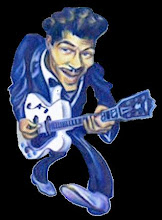
Chubby Checker has a much larger role in DKTT, his relationship with Ted reminds me somewhat of the way Chuck Berry and Alan Freed were always hanging out together in Go Johnny, Go!. Chubby sings 6 songs during the movie - "Twistin'", "La Paloma Twist", "I Love To Twist", "The Fly", "Don't Knock The Twist" and a duet with Dee Dee Sharp "Slow Twistin". Since Chubby works at a club and the movie also has "The Twist Spectacular" at the end of the show this allows the movie to include performances from The Dovells (featuring lead singer, Len Barry) doing "The Bristol Stomp" and "Do The New Continental", Vic Dana singing "Little Altar Boy", The Carroll Brothers rocking out on "Hey Bo Diddley", Linda Scott performing "Yessiree", and best of all Gene Chandler decked out in all of his regalia doing "Duke of Earl" (see video clip below).
I'm sure the producers knew that the twist was a fad, which could end at anytime, even possibly before they got the movie into the theaters. It looks like they hedged their bets by introducing several other "dance" songs in the movie. When the brother and sister are discovered they are dancing to a record of Dee Dee Sharp singing "Mashed Potato Time". In DKTT we also hear "Do The New Continental", "The Bristol Stomp", and even Chubby stepping away from the twist with "The Fly".


 I couldn't find a trailer for the movie, but you can watch the whole movie in parts on youtube. Below is Donovan from a 1972 BBC appearance singing a song he wrote for the movie that didn't make the final cut.